Guides & Custom23 min read
Print t-shirts in Barcelona: quick guide to choose technique and workshop
By
Published on 15 de Jun 2026
If you’re thinking about printing t-shirts in Barcelona, let me tell you that it’s much easier than it seems. Whether you want to launch your own brand, create something for a company event, or simply make a gift that nobody else will have, the city is full of workshops and options to bring any idea you have to life. The key, like with almost everything, is making the right decisions from the start.
Getting into a custom t-shirt project can feel intimidating at first, but everything becomes simpler if you break it down into manageable chunks. It’s not just about having a cool design, but understanding how that design will work with the fabric and printing technique. This guide will give you that boost of confidence to get started on the right foot.
We’re going to focus on the decisions that really make the difference between an amateur result and one that looks professional. You’ll learn to quickly spot which printing method fits best with your idea and your budget, a key choice you can explore much more deeply in our ultimate guide to custom t-shirts.
Before you start asking for quotes like crazy, it’s essential that you have three pillars of your project clear:
The ideal printing technique: Are you looking for the durability and good price per unit of screen printing for a large run? Or do you need the flexibility of digital printing (DTG) for photographic quality designs and small quantities?
The choice of fabric: The final finish depends a lot on the material. It’s not the same to print on 100% cotton as on a polyester blend. Each technique has its favorite fabrics, and this is something you can’t overlook.
The number of t-shirts (the run): This is one of the factors that will most affect the price. The higher the volume, the lower the cost per t-shirt usually drops, especially with techniques like screen printing.
And don’t think this is a small market. The potential here is huge. Just to give you an idea, in the FC Barcelona merchandising sector, revenues for the 2023-2024 season reached 108.9 million euros, a 8.6% increase from the previous year. This shows the massive demand there is for personalized products in the city. You can find out more about these figures and their impact on Palco23.
Forget about the confusion between screen printing, vinyl, or DTG. We’re going to explain to you with clear examples when to use each one so that every step you take is the right one and your t-shirt printing project in Barcelona is a huge success.
Each method for printing t-shirts in Barcelona offers a completely different finish, durability, and feel. And believe me, knowing the differences is not just a technical matter; it’s the key to your idea coming to life just as you imagine it and, most importantly, fitting your budget.
Let’s break down the most common options you’ll find in workshops around here.
The right choice depends on three things: how complex your design is, how many t-shirts you need, and the type of fabric you’re going to use. There’s no “better” technique in absolute terms, but one that fits perfectly with each project.
To give you a quick idea of which path to take, we’ve put together this little decision tree. It’s a visual cheat sheet to guide you.
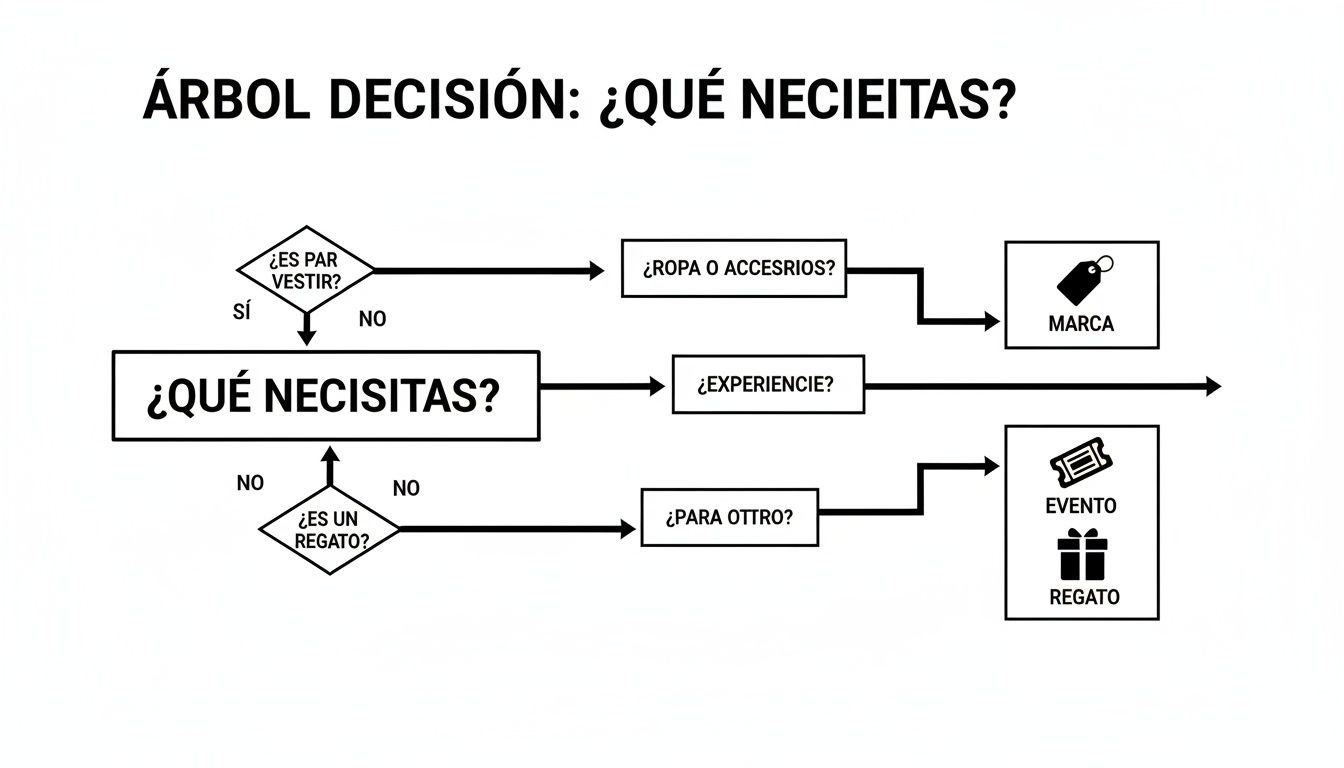
As you can see, the simple purpose of your project (whether it’s for a brand, an event or a one-off gift) already gives you a pretty clear hint. Now let’s get down to business so you know exactly what to order.
Screen printing is the classic method, the gold standard. And it’s still the most cost-effective option when you need a good batch of units. It works by applying layers of ink through a mesh (or screen), using a different screen for each color in your design.
DTG printing (which stands for Direct-to-Garment) works in a way we all understand: it’s like an inkjet printer, but instead of paper, it prints directly onto cotton fabric.
It’s the perfect solution if your design is a photograph, an illustration with gradients, or any image with a huge color palette. If your idea is visually complex, DTG is your best friend.
The great advantage of DTG is that there’s no minimum order. You can order a single t-shirt to test a design or make a unique gift without the cost skyrocketing. It’s pure flexibility.
Textile vinyl is another story. Here, a plotter cuts your design onto a colored vinyl sheet, which is then “ironed” onto the t-shirt with heat. It’s the ideal technique for text, numbers or logos with very clean and defined lines.
Its main appeal, without a doubt, is the special finishes you can’t get any other way. Think metallic effects, fluorescent, glitter, or even velvety texture. It’s the technique par excellence for personalizing sports apparel with names and numbers. If you need inspiration, take a look at how creative designs can be applied to personalized t-shirts to get some ideas.
Sublimation is a fascinating technique. The ink converts to gas through heat and literally dyes the fabric fibers permanently. The result? A print that doesn’t feel tacky, doesn’t crack with washing, and is 100% breathable.
But it has an important limitation: it only works on polyester garments that are white or a very light color. For this reason, it’s the favorite option for sportswear, lanyards, or even mugs.
To make it even easier for you, here’s a table that summarizes all this at a glance.
Use this table to decide which printing technique is most suitable for your project based on design type, quantity, fabric, and cost.
| Printing technique | Ideal for | Compatible fabrics | Cost per unit | Durability |
|---|---|---|---|---|
| Screen printing | Large runs (+20), designs with flat colors. | Cotton, blends. | Very low in large quantities. | Very high |
| DTG | Complex designs, photos, gradients, small orders. | Mainly cotton. | Moderate, consistent regardless of quantity. | Good |
| Textile vinyl | Text, simple logos, numbers, special finishes. | Cotton, polyester, blends. | Moderate-high, ideal for few units. | High |
| Sublimation | Sports apparel, full-color designs without tactile feel. | Only white or light polyester. | Moderate. | Excellent |
With this information, you now have a much stronger foundation to talk with any workshop and know exactly what best suits what you’re looking for. Now it’s just time to take the next step
A killer design can end up printed like a disaster if the file you send to the workshop isn’t properly prepared. Trust me, this part is your lifesaver to avoid the most common technical failures and ensure that what you see on your screen is faithfully transferred to the t-shirt. If you really want your print t-shirts in Barcelona project to turn out great, mastering these concepts is key.
Let’s be clear: the quality of your file is just as important as the design itself. A workshop can have the best machinery in the world, but it can’t work magic with a low-resolution image or a poorly configured file. That’s why we’re going to break down the three pillars you need to master.
The resolution of your image, measured in dpi (dots per inch), is what determines the sharpness and detail of the print. To print on fabric, the golden rule is to always work at 300 dpi and at the actual size you want to print. An image that looks great on your phone (which usually runs at 72 dpi) will look pixelated and blurry on cotton.
Think of pixels as the bricks of your design. At 72 dpi, the bricks are large and rough; they look good from far away, but up close you can see all the gaps. At 300 dpi, on the other hand, the bricks are small and compact, creating a solid and defined image.
A golden tip: don’t try to “enlarge” a low-resolution image to 300 dpi in Photoshop. The program will invent the missing pixels, and the result will be a blurry and artificial effect. Your design needs to be created, from the start, with the correct resolution.
The colors you see on any screen are created with the RGB (Red, Green, and Blue) model, which is based on light. However, printers work with inks, using the CMYK (Cyan, Magenta, Yellow, and Black) model. The RGB color space is much wider and can display super vibrant colors, like neon, which are impossible to replicate with physical inks.
If you send your file in RGB, the machine will automatically convert it to CMYK, and it’s almost certain that the colors will fade. To avoid unpleasant surprises, set your document to CMYK color mode from the very beginning. This way, what you see on screen will be much more faithful to the final result.
Not all formats work for everything. The choice depends entirely on the printing technique you’re going to use.
Vectors (.AI, .EPS, .SVG) for screen printing and vinyl: A vector file isn’t made of pixels, but of mathematical formulas. What does this mean? That you can enlarge it to the size of a building without losing any quality whatsoever. It’s the essential format for screen printing and vinyl, because it allows you to separate colors into perfect layers and achieve clean, defined cuts.
PNG with transparent background for DTG: For direct-to-garment printing (DTG), a .PNG file at 300 dpi with a transparent background is your best ally. This tells the printer to only apply ink where your design is, without stamping a white box around it. The result is a design that integrates perfectly with the color of the t-shirt.
One final note: if your design includes text, it’s vital that you convert the fonts to outlines or curves. This way, the workshop doesn’t need to have the same typeface installed that you do, and the text will print exactly as you designed it.
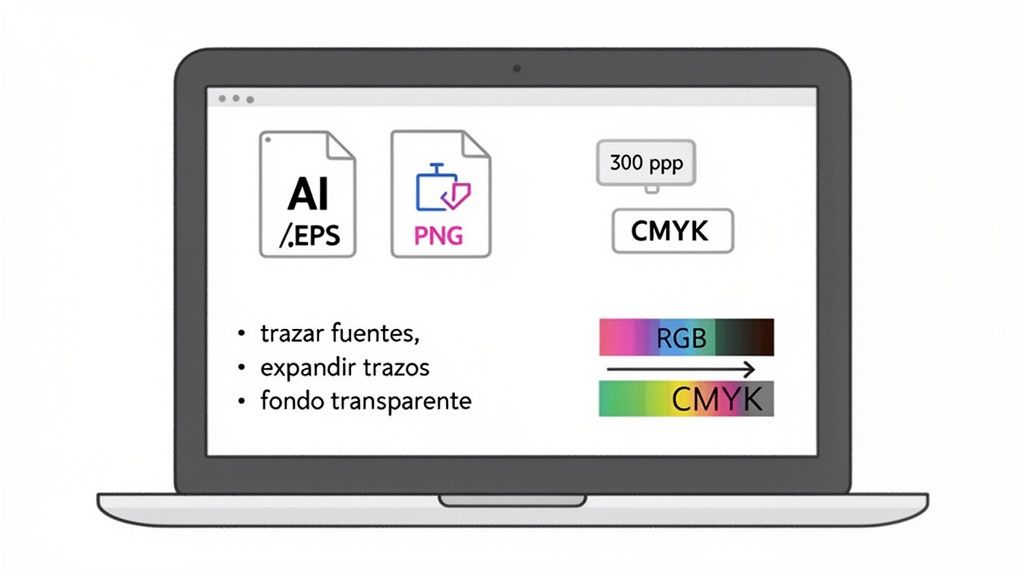
Preparing files well might seem like a drag, but it’s what separates an amateur finish from a truly professional one. It’s about spending ten extra minutes at the beginning to save yourself a headache (and money) at the end.
Finding the perfect workshop to print your t-shirts in Barcelona is, without a doubt, one of the most important decisions in your project. The city is full of options, from small studios that care for each garment to large-scale printing companies. And believe me, choosing well will save you time, money, and more than one headache. It’s not just about finding the lowest price, but about finding a partner who understands your vision and knows how to bring it to life on fabric.
The first thing you should ask yourself is: what matters most to me? If your goal is to produce 500 t-shirts for an event with a single-color logo, your priority will be the cost per unit and getting them delivered on time. But if what you’re looking for is a limited edition of 20 units with a premium finish for your brand, you’ll need someone who pays attention to details and advises you at every step.
Start with an online search, of course, but don’t stop at the first page of Google. Dive into their websites and, above all, their social media to see what they’ve done and how they showcase it.
A good workshop doesn’t just print and charge. It acts as an advisor. Communication is key to everything. When you contact them, pay attention to whether they ask you questions, suggest improvements, or warn you of possible issues with your design. That interest is a sign that they’re real professionals.
For small orders, a digital mockup is usually enough to get an idea. But if you’re going to invest in a large print run, always ask for a physical sample. I’m telling you from experience: seeing an image on screen is nothing like touching the fabric, feeling the weight of the t-shirt and checking the actual intensity of the colors.
The cost of a sample (which usually runs around 15 € – 30 €) is a minimal investment compared to the risk of receiving 200 t-shirts that aren’t what you expected. It’s your personal quality insurance.
When you ask for a quote, don’t just send the design with a “how much does it cost?”. To get a realistic figure and avoid surprises, your email should be as detailed as possible:
With all this information, you’ll be able to compare apples with apples between different workshops. Keep in mind that a supplier with well-organized processes is a plus, especially if your project is connected to an online store. In fact, recent industry data from Barcelona shows that good operational management can double profit margins, with online sales that have tripled income from the previous year. You can discover more about these record figures and their impact on the FC Barcelona website.

Okay, so you have the design, you know what printing technique you want and you’ve found a workshop in Barcelona that gives you good vibes. Now the fun part begins: production. In this phase, believe me, clear communication and an eye for detail are your best allies to make everything run smoothly.
Knowing how to manage this stage is what makes the difference between receiving your perfect t-shirts and getting a nasty surprise. Let’s break down the key points so you have control from start to finish.
If there’s a critical moment in all this mess, it’s the approval of the digital proof or mockup. It’s nothing more than a layout that the workshop will send you so you can see how your design will look on the t-shirt. And I’m telling you something: don’t give it the thumbs up lightly.
Look at it with a magnifying glass. Seriously. Make sure of these three points:
Give the mockup the "OK" only when you’re 100% sure. The moment you approve it, the machines start running and any change is either impossible or going to cost you a fortune.
Normally, printing t-shirts in Barcelona takes between 5 and 10 business days. But this isn’t an exact science. It depends a lot on how busy the workshop is or whether your order is very complex.
Always ask for an estimated delivery date. And here’s a golden tip: if you need the t-shirts for a specific event, add a couple of days of buffer time to that date. Unexpected things happen.
By the way, more and more people are paying attention to sustainability. Producing a single cotton t-shirt uses a whopping 2,700 liters of water, and starting in 2025 European regulations are going to get stricter about this. Don’t hold back and ask your workshop if they have organic cotton or eco-friendly ink options. If you’re interested in the topic, you can read more about the environmental impact of the textile industry and make a more conscious decision.
When the box with your t-shirts finally arrives, take a deep breath and don’t get carried away by excitement. Before you sign off on the job, it’s time to do a little quality control check.
Open the box and count. Is the number of units correct? Does the breakdown of sizes match what you ordered? If you’re not sure how to measure a garment, you can use our size charts as a reference guide.
Next, pull out a few t-shirts at random and put them next to the digital proof you approved. If you see anything odd—a printing flaw, a color that’s off, or a suspicious stain—take photos right away and call the workshop. A professional supplier will take care of it and give you a solution.
Even though you’ve got almost everything figured out, there are always little doubts that can hold up your project. That’s normal. Here we’re going to answer the most typical questions we get at the workshops, with straightforward answers so you don’t have a single unanswered question before launching your order.
That’s the million-dollar question, and the honest answer is: it depends. There’s no fixed price, because everything changes depending on the technique you use, how many t-shirts you order, and how complex your design is.
To give you a real idea: if you want just a single t-shirt with a full-color photo (DTG printing), normally it will cost you around 15 € to 25 €. But if you go for a larger order, let’s say 100 t-shirts with a single-color logo in screen printing, the cost per unit can drop dramatically to 4 € or 7 €. Vinyl, on the other hand, sits at an intermediate point.
The best advice I can give you is this: be clear about the details (quantity, design, type of t-shirt) and request quotes from several workshops. It’s the only way to compare with real data on the table.
Some workshops in Barcelona will tell you yes, but the vast majority prefer to work with their own garments. The reason is simple and logical: they know the fabric of their t-shirts inside and out and know how the ink will react. That way they can guarantee that the print adheres well and lasts over time.
If you insist on bringing your own t-shirts, the most likely outcome is that the workshop will warn you that they won’t be responsible if the result isn’t perfect. If you still want to try, talk to them beforehand. And above all, make sure the garments are new, unworn, and very importantly, haven’t been through the washing machine.
The minimum order depends entirely on the printing technique you choose. Each one has its own rules of the game, especially because of setup costs.
You’ve put effort into the design and invested in your t-shirts. The last thing you want is for the print to crack or fade after the second wash. Taking care of them is easier than it seems, you just have to follow a few golden rules.
To extend the life of any print, do this:
With these small gestures, your print will stay looking like new for much longer.
At Geek T-Shirt Store we’re crazy about the world of original designs. If you’re lacking inspiration or simply want to add an awesome t-shirt to your wardrobe, check out our catalog at https://tiendacamisetasfrikis.com.
Hundreds of original designs waiting for you in the store.
Join the club and we’ll email your welcome coupon right away. Original anime, gaming and comic designs.